
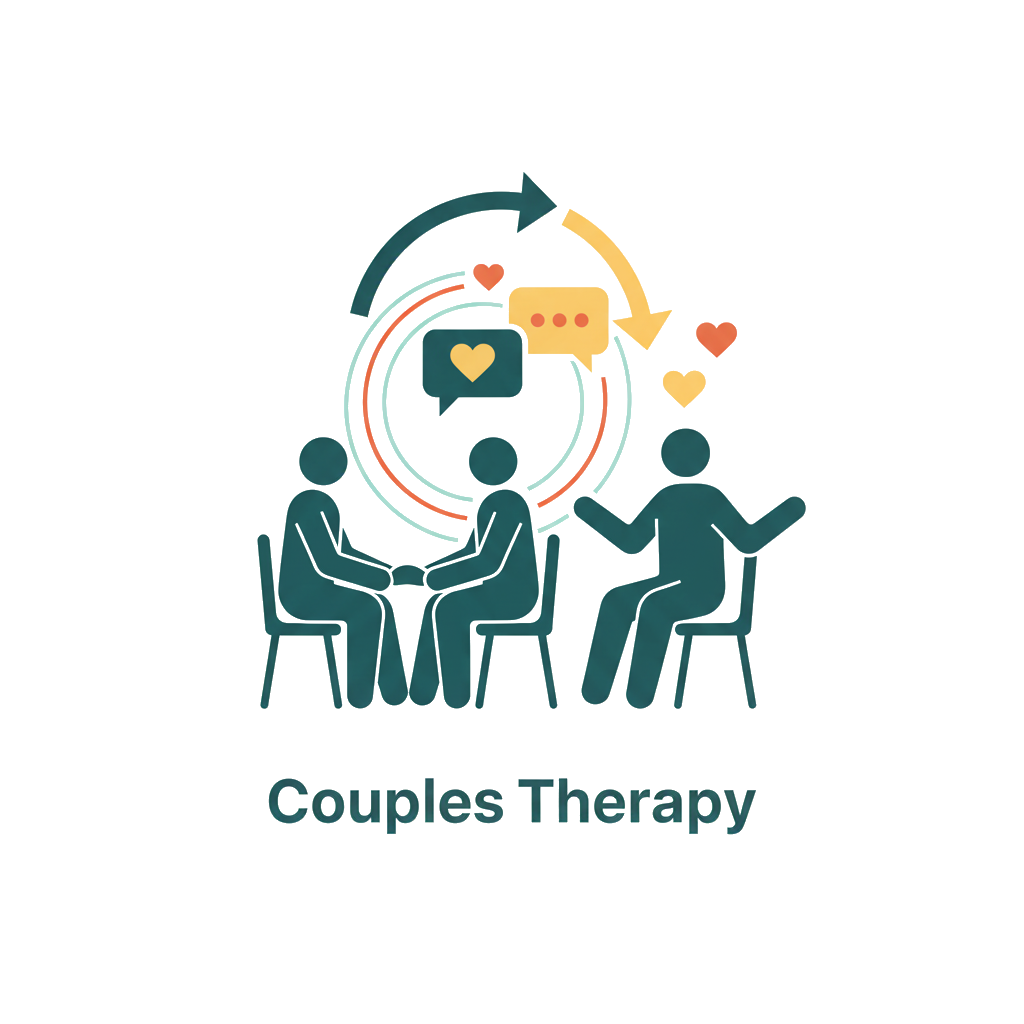
Couples Therapy
When the connection feels harder than it used to
Even the strongest relationships go through seasons of distance, frustration, or misunderstanding.
Most couples don’t come to therapy because they’ve “failed” — they come because they’ve outgrown old patterns that no longer work.
- BondWiseTherapy
- Salt Lake City, Utah
- Oregon via Online
You might notice yourselves saying things like:
- "We keep having the same argument and never get anywhere."
- "I feel like I’m the only one holding things together."
- "We love each other, but we’ve lost the spark."
- "I shut down when things get tense."
- "My partner says I’m too controlling / too sensitive / too distant."
- "We don’t know how to talk about sex, money, or our families without fighting."
- "I’m tired of being the one who always tries while my partner avoids."
Underneath these moments are often real, human themes I see in my work every day:
Communication breakdowns
Communication breakdowns - talking past each other, or not talking at all.
Unequal emotional labor
Unequal emotional labor — one partner overfunctioning while the other withdraws.
Conflict cycles
Conflict cycles — pursuit and withdrawal, criticism and retreat, control and avoidance.
Mismatched Needs
Mismatched needs for closeness and space.
Family-of-origin wounds
Family-of-origin wounds replaying inside the relationship.
Emotional or sexual disconnection
Emotional or sexual disconnection — difficulty feeling desire, safety, or play.
Stress and burnout
Stress and burnout from demanding careers, parenting, or chronic anxiety.
Substance use, autonomy, or lifestyle differences
Substance use, autonomy, or lifestyle differences creating tension around trust and freedom.
Big life transitions
Big life transitions — moving, parenting, health changes, or cultural differences that test the bond.

How I work with couples
My approach blends Imago Relationship Therapy, the Developmental Model, and somatic and attachment-based processing.
I also integrate emotion-imagery techniques inspired by Emotional-Imagery Therapy — helping couples translate felt experiences, symbols, and body sensations into emotional awareness and repair.
I’ll start by slowing things down. Instead of arguing in circles, I’ll use structured dialogue to practice curiosity, validation, and empathy. You’ll each get a chance to feel heard — often in ways that haven’t happened before.
Therapy isn’t about deciding who’s right. It’s about understanding what’s really happening between you and learning new ways to meet each other with honesty and care.
What to Expect in my Sessions
Couples therapy with me typically unfolds in three stages:
We meet together to understand your relationship history, goals, and current stress points.
This helps me learn about your personal background, attachment style, and emotional landscape without the pressure of the partner’s presence.
Most of our time is spent in joint sessions, but I may recommend occasional individual sessions if one partner needs space for regulation, trauma processing, or deeper insight work that supports the couple’s progress.
Our sessions are structured but alive. I guide you through intentional dialogue, somatic awareness, and experiential exercises, always tuned to your emotional pace.
You can expect:
Safety and neutrality
Somatic exploration
Curiosity over judgment
Active coaching
Homework and reflection tools
Between sessions, you’ll receive guided practices or mindful prompts to integrate new habits into daily life.
Depth and practicality
Some sessions feel tender and reflective; others are lively and skill-focused. Over time, you’ll begin to experience fewer explosions, faster repair, and more authentic connection — not as a performance, but as a felt sense of safety and trust.
Religious Trauma & Faith Transition Support
I work with clients healing from religious trauma, high-control faith systems, purity culture, and identity-based spiritual harm. My approach is grounded, trauma-informed, and LGBTQ+ affirming. Whether you’re questioning, deconstructing, or rebuilding your connection to spirituality, you don’t have to do it alone.
My Perspective
When couples understand the emotional logic beneath their conflicts, what once felt hopeless starts to make sense.
Together we work toward a relationship that feels safe, passionate, and intentional — one that can hold two whole people.