

When people feel overwhelmed by anxiety, anger, or conflict in their relationships, it can feel like something has taken over. You may say something you regret, shut down during an argument, or spiral into fear before you even understand what happened. In couples therapy, I often help partners recognize that these moments are not random — they are emotional reactions driven by the nervous system. One of my favorite ways to explain this process is through a simple metaphor: your mind is like a bus. The question is — who is driving it?
The Emotional Bus Inside All of Us
A helpful way to understand emotional reactions is through the “Passengers on the Bus” metaphor, often used in psychology and acceptance-based therapies. This metaphor helps explain why strong emotions like anxiety, anger, shame, or defensiveness can sometimes take over our reactions, especially in close relationships.
Imagine your mind as a bus.
You are the driver.
Inside the bus are many emotional passengers:
- Anxiety
- Anger
- Fear
- Shame
- Hopelessness
- Defensiveness
- Jealousy
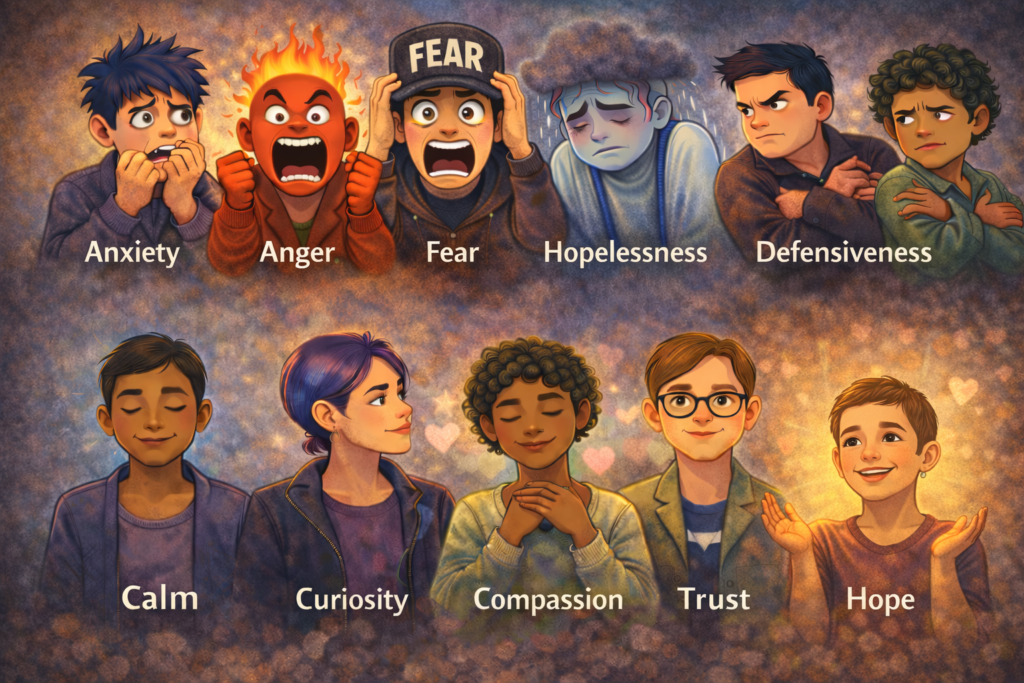
Some passengers sit quietly.
Others stand up, shout directions, and try to grab the steering wheel.
When emotions become intense, it can feel like those passengers are taking control of the bus.
They might shout things like:
“Defend yourself!”
“Don’t trust them!”
“You’re being attacked!”
“Something is wrong!”
When this happens, we often react quickly.
We interrupt.
We shut down.
We become defensive.
We say things we later regret.
But the key insight is this:
Emotions are passengers, not drivers.
They can be loud.
They can be convincing.
But they do not have to control the direction of the bus.
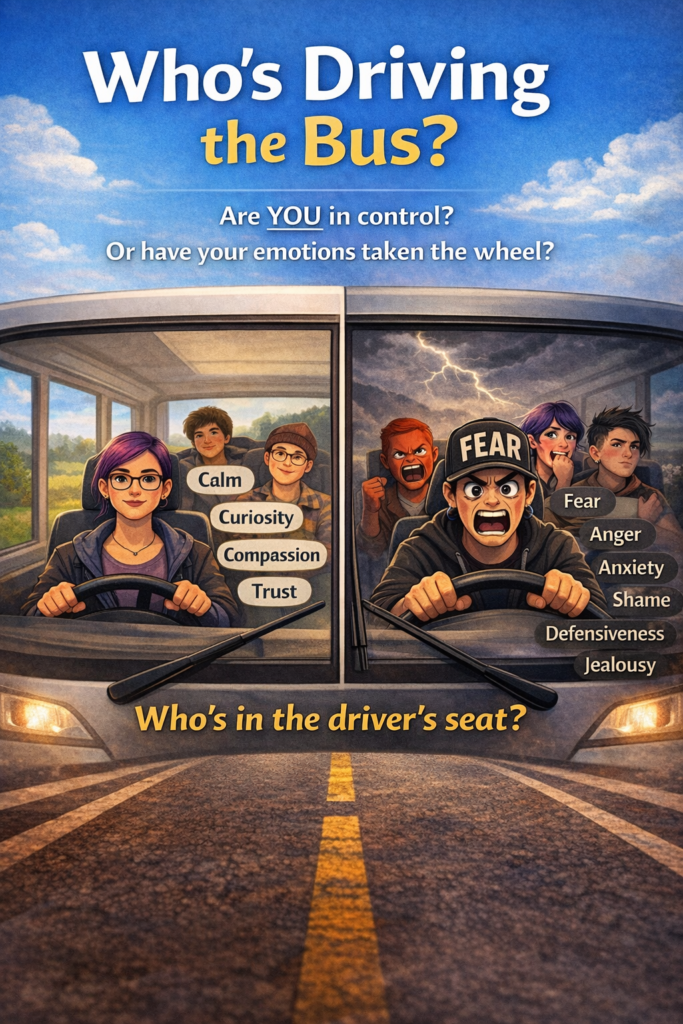
When fear is driving the bus, you may become reactive, defensive, or shut down during conflict. When shame is driving, you might collapse inward, over-apologize, or assume the worst about yourself or your partner. When anger is driving, everything can start to feel urgent, sharp, or attacking. The goal is not to eliminate these emotional passengers. The goal is to recognize them and prevent them from taking control of how you respond.
What This Looks Like in Relationships
In couples therapy, I often describe what happens as two emotional buses colliding. One partner’s anxiety may be driving their bus, while the other partner’s defensiveness, hurt, or frustration is driving theirs. Instead of two grounded people having a conversation, the emotional passengers begin reacting to each other.
This is when couples get stuck in painful cycles of criticism, withdrawal, escalation, misattunement, and misunderstanding.
It does not mean the relationship is broken. More often, it means both nervous systems are activated. When even one person returns to the driver’s seat — with a little more steadiness, curiosity, and self-awareness — the entire interaction can begin to shift.
How to Get Back in the Driver’s Seat
When emotions begin to take over during conflict, a few small steps can help you slow down, regulate your nervous system, and return to responding intentionally instead of reacting automatically.
Pause.
Before responding, give yourself a moment. Even ten seconds can interrupt an automatic emotional reaction.
Regulate your body.
Take a breath. Unclench your jaw. Feel your feet on the floor. Emotional regulation begins in the body, not just in the mind.
Name the passenger.
Ask yourself what emotion is trying to drive right now — anxiety, shame, anger, or fear.
Reclaim the wheel.
Remind yourself that the feeling is present, but it does not have to control your response.
Choose your direction.
Once you feel more grounded, decide how you want to respond in a way that reflects your values and the kind of relationship you want to build.
Why Emotional Regulation Matters in Relationships
In close relationships, emotional activation happens frequently. Partners naturally trigger each other’s fears, insecurities, and old patterns — often without intending to.
This is a normal part of intimacy.
What matters most is how we respond when those emotions show up.
When strong emotions take over, conversations can quickly turn into familiar conflict cycles, such as:
criticism and defensiveness
withdrawal and pursuit
anger followed by shame
misunderstanding followed by emotional distance
These patterns can leave both partners feeling unheard, misunderstood, and emotionally unsafe.
Learning to return to the driver’s seat of your emotional bus helps interrupt these cycles. Instead of reacting automatically, you gain the ability to pause, regulate your emotions, and respond more intentionally.
This shift creates the conditions for real communication, emotional safety, and deeper connection in relationships.
Emotional Awareness Is a Relationship Skill
Many people assume emotional regulation should happen automatically.
But emotional awareness is actually a skill — and like any skill, it can be practiced and strengthened over time.
The more we learn to notice emotions early, the easier it becomes to prevent them from taking control of our reactions.
This process often begins with a simple shift in awareness.
Instead of thinking:
“I am angry.”
We begin to notice:
“Anger is here right now.”
This small shift creates space between you and the emotion.
You are no longer the emotion itself. Instead, you are the driver noticing a passenger on the bus.
That space allows you to slow down, reflect, and choose how you want to respond rather than reacting automatically.
What Emotional Regulation Actually Looks Like
Emotional regulation does not mean suppressing emotions or pretending they are not there.
In fact, ignoring emotions often makes them louder.
Instead, emotional regulation means learning how to notice what you are feeling, allow the emotion to exist, and prevent it from taking control of your behavior.
For example:
You might notice anxiety rising before responding to your partner.
You might recognize defensiveness showing up during a difficult conversation.
You might feel anger in your body but choose to pause before reacting.
These small moments of awareness help you stay in the driver’s seat rather than letting emotional passengers take over the wheel.
The Goal Is Not to Silence Your Emotions
One common misunderstanding is that emotional regulation means getting rid of difficult feelings.
But emotions exist for a reason.
They carry important information about our needs, boundaries, and fears.
Anger might signal that a boundary has been crossed.
Fear might signal vulnerability or uncertainty.
Shame might reflect a fear of disconnection or rejection.
Instead of trying to remove emotions from the bus, the goal is much simpler: let them ride without letting them drive.
When emotions are acknowledged but not in control, something important begins to happen.
The nervous system starts to settle.
Curiosity becomes possible.
Compassion becomes possible.
And real conversation becomes possible.
Returning to the Driver’s Seat Takes Practice
No one stays calm and regulated all the time.
What matters is not perfection. What matters is the ability to return to the driver’s seat when emotions begin to take over.
This might look like:
pausing before responding
taking a slow breath
naming what you are feeling
asking for a short break during conflict
returning to the conversation with more clarity
Over time, these small practices create a powerful shift.
Instead of reacting automatically, you begin responding with more intention and awareness.
And that shift can transform the emotional climate of a relationship.
Learning Emotional Regulation in Therapy
Many people learn emotional regulation skills in therapy, where there is space to slow down and explore reactions, relationship patterns, and emotional triggers with guidance and support.
In couples therapy, partners often practice these skills together. Instead of reacting automatically during conflict, they begin to notice what emotions are present and how those emotions influence their communication and behavior.
At BondWise Therapy, I help couples develop practical emotional awareness skills so they can respond to each other with greater clarity, understanding, and connection. Many couples therapy approaches, including Imago Relationship Therapy, focus on helping partners slow down emotional reactions and become curious about the deeper feelings beneath conflict.
When couples learn to pause and notice what emotions are present, conversations can shift from blame and defensiveness toward empathy, curiosity, and deeper understanding.
In relationship therapy, I help couples learn how to:
slow down emotional escalation during difficult conversations
recognize protective reactions such as defensiveness, anger, or withdrawal
communicate underlying emotions instead of reacting impulsively
build emotional safety and trust in the relationship
develop healthier communication patterns during conflict
When partners learn to notice emotional passengers instead of reacting to them, conflict becomes less threatening and more constructive.
Instead of getting stuck in cycles of blame, shutdown, or defensiveness, couples begin to understand what is happening beneath the surface of their reactions.
Over time, this shift allows conversations to move from emotional reactivity to genuine understanding — which is the foundation of healthy communication, emotional safety, and lasting connection in relationships.